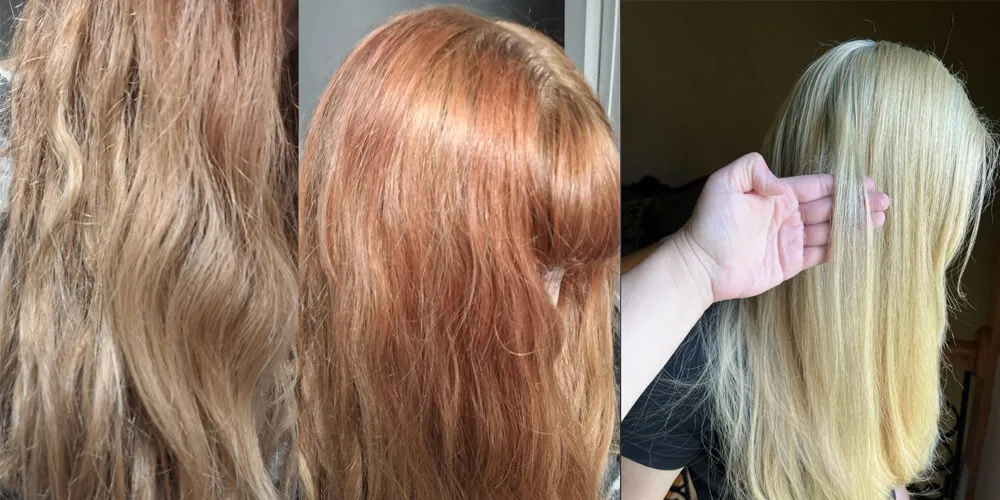
Understanding lift potential when you bleach
Understanding lift potential before you start is the difference between a seamless blonde transformation and damaged, disappointing results.
One of the most common questions we hear from colorists and at-home users alike is: how light can I go in a single session?
The honest answer depends on several factors — your developer strength, the number of applications, the condition of the hair, and where on the head you're working.
This guide breaks it all down clearly so you can plan smarter and achieve better results.
The basics: what does "lifting a level" mean?
.jpeg)
Hair color levels
Hair color levels run from 1 (black) to 10 (lightest blonde).
Lifting refers to how many of those levels you remove in a single bleaching session.
A level 4 (medium brown) hair lifting 4 levels would take you to a level 8 (light blonde).
The more levels you need to lift, the more carefully you need to plan — both for results and for hair integrity.
Lift expectations by developer strength
| Developer | 1 Application | 2 Applications | Root area |
|---|---|---|---|
| 20 Vol | Up to 3 levels | Up to 4–5 levels | Add ~2 extra levels |
| 30 Vol | Up to 5 levels | Up to 7–8 levels 2nd app = 20 Vol | Add ~2 extra levels |
Important note on the second application
When doing two rounds of bleach, always use 20 Vol for the second application — never 30 Vol.
The hair has already been opened and sensitised by the first round.
Using a weaker developer for the second pass protects integrity while still achieving significant lift.
The root advantage — why roots lift faster
If you've ever noticed that the hair closest to the scalp goes blonde faster, that's not your imagination.
Body heat from the scalp accelerates the bleaching process significantly, which means you can expect roughly two extra levels of lift at the root compared to the lengths in any given application.
This is why most colorists apply bleach to the lengths and ends first, then work back toward the root — so everything processes to a similar level by the time you rinse.
Choosing the right bleach for your client's hair type
Not all hair responds to bleach the same way, and using the wrong product can mean compromised results or unnecessary damage.
Here's how to approach two very different hair types:
For fine, fragile & sensitive hair
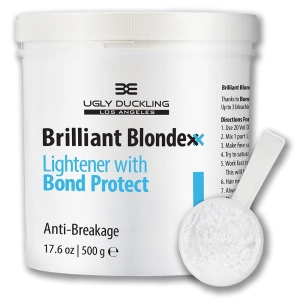
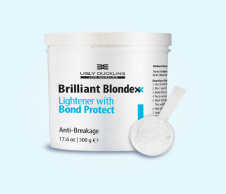
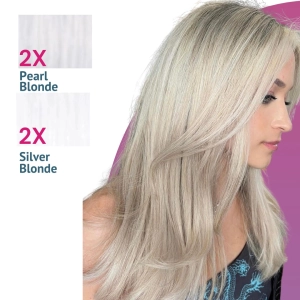
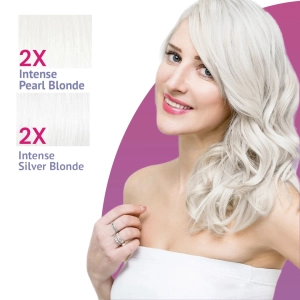
Brilliant Blondexx Bleach
Formulated with built-in bond protect, making it gentler on hair that needs extra care during the lightening process.
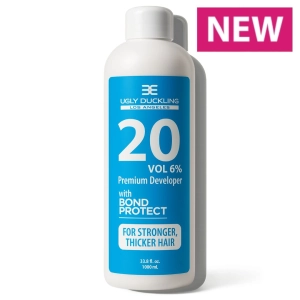
+ Developer With Bond Protect
For dark, coarse, thick or colour-treated hair
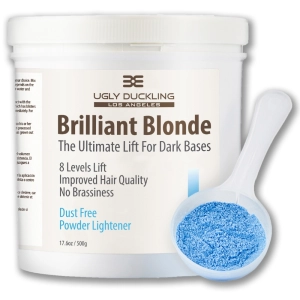
Brilliant Blonde Bleach
Greater lifting power for resistant or previously darkened hair — also paired with bond-protect developers for added safety.
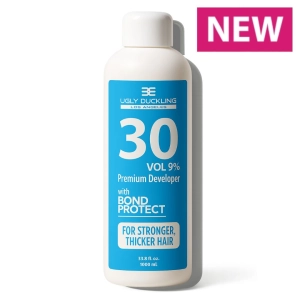
+ Bond Protect Developer
When hair has been coloured darker — whether with a permanent dye, a filler, or a box colour — it tends to be more resistant and may require the greater power of Brilliant Blonde Bleach. F
or hair that is naturally fine or has been previously lightened, Brilliant Blondexx is however a better choice.
In both cases, pairing with the appropriate bond-protect developer makes a meaningful difference to the long-term health of the hair.
Mix it right — the golden rules of application
Getting the most from your bleach isn't just about which product you choose — technique and consistency matter just as much.
- Always mix 1 part bleach to 2 parts developer. This gives you a mix that is fluid enough to saturate the hair properly. A dry, stiff mix will not distribute evenly and can lead to patchiness.
- The mix should be nice and wet. If it's looking thick and paste-like, add a little more developer. You want it to glide through the hair easily.
- Always make the second mix fresh. Don't try to reuse leftover mix from the first application — by the time you're ready for round two, it will have lost potency. Mix a completely fresh batch just before you begin the second pass.
- Use foil on the lengths. Wrapping sections in foil traps body heat around the hair, which accelerates the lift and helps everything process more evenly. This is especially helpful when lifting multiple levels in a single session.
Note that foil isn't just for highlights — using it throughout a full-head bleach on the lengths speeds up processing noticeably, which can reduce the overall time the hair is under chemical stress.
Setting realistic expectations for your clients
If a client walks in with level 3 (dark brown/black) hair and wants to leave the same day at a level 9 pale blonde, it's your job to do do a correct audit.
Check hair condition first and foremost. Make sure that it is is healthy and has still maintained its elasticity.
You check this by cutting off one single strand and wet it. Then pull the single hair strand from both ends. If there is stretch, that means it is still elastic and therefore healthy.
Now, the 6-level lift required is well within reach over two applications with the first application using 30 Vol, and the second application using 20 Vol as we explained above.
This lift should be very easily possible in just one bleaching session.
At Ugly Duckling we are not great fans of stylist who say that "beaching is a process" and their client needs to pay several visits to get their hair blonde.
What are you going to do with the root regrowth each time the client comes in?
Do it once and do it right would be our motto.
The ideal should be to take the hair all the way to level 10.
Once you do that, never bleach that part of the hair again.
Bleaching Dark Roots and Fine Hair
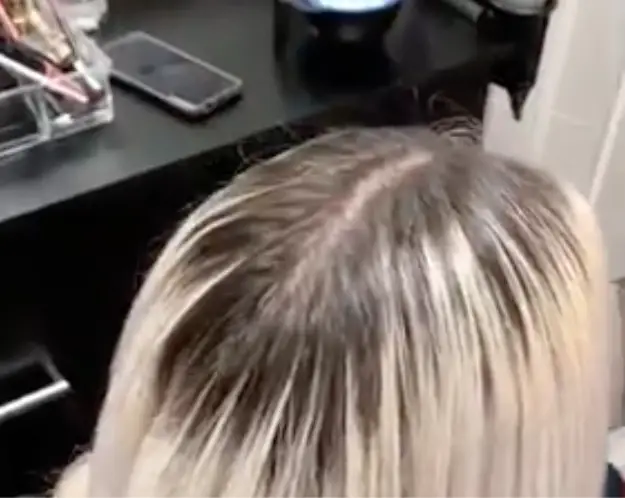
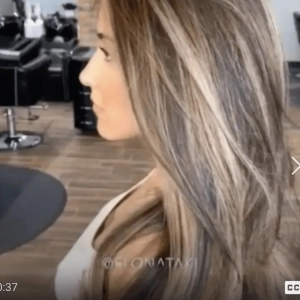
What do you do if your client's hair looks like this?
Her root is dark, level 2.
But her lengths clearly lighten very well and have been lightened in the past to level 10.
Plus her hair is pretty thin.
We would suggest Brilliant Blondexx Bleach with Bond Protect plus 20 Vol developer with Bond Protect on the dark part only.
If you con't get it to lift all the way. make a second application (fresh mix, so the bleach is wet).
Once the hair has been lifted (and it will), then rinse. Then tone to make the whole head consistent.
Dark Roots and Thick Hair
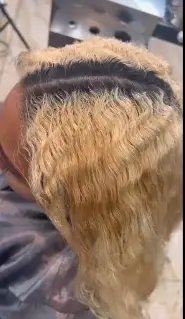
How about this case? What do you do here?
Once again, a dark root area and blonde lengths. The only difference is that the hair quality is much thicker, plus it's curly.
Latino or Black American hair rather than European.
In this case, we would do the same as above but substitute Brilliant Blonde Blue Bleach for dark based, using with 20 Vol developer with Bond Protect.
If necessary, make a second application with a fresh mix.
Bleach only the dark part and rinse once you get the lift.
Then tone the whole head.
Bleaching Yellow Parts Inside Blonde Hair
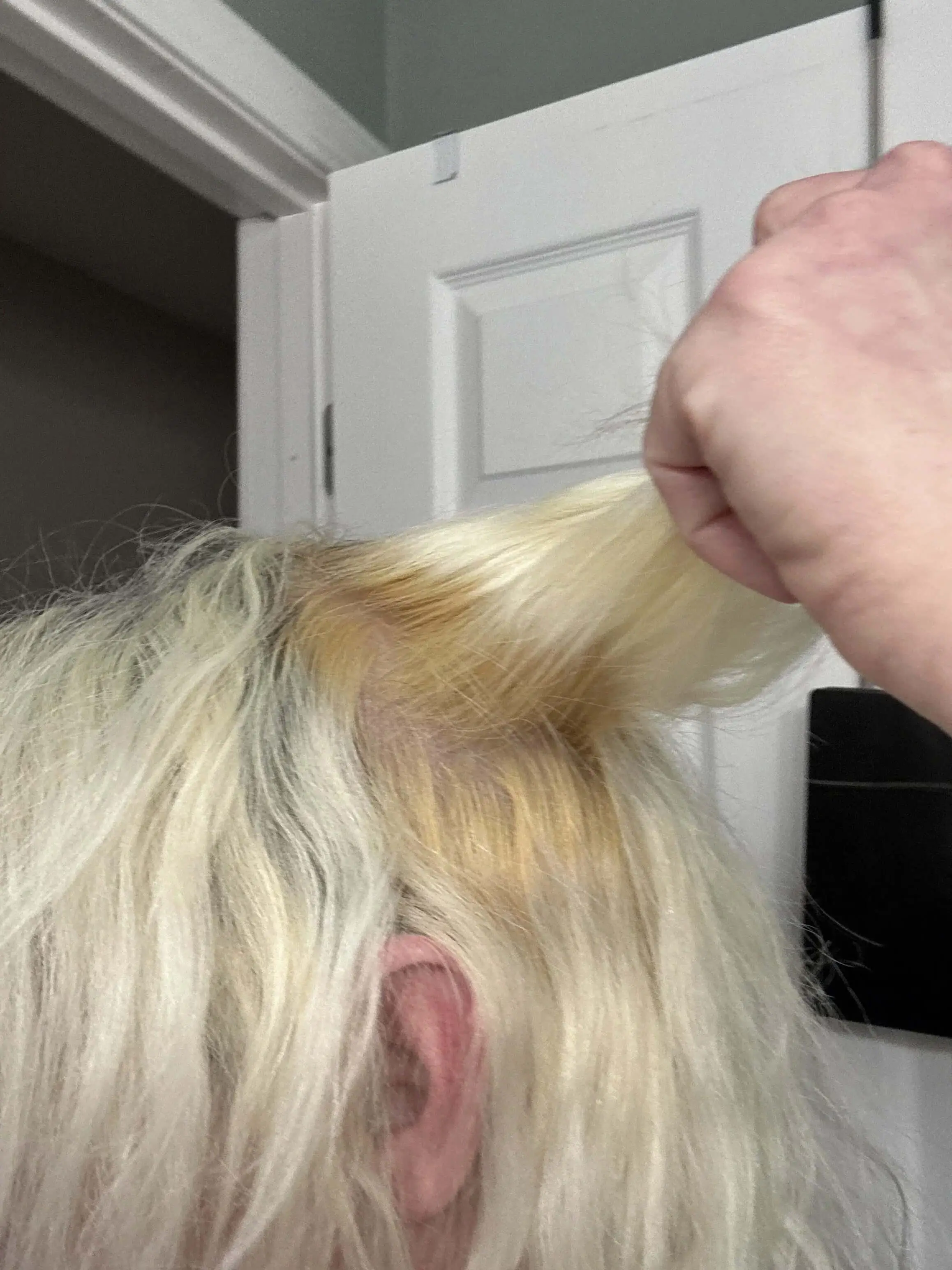
What would you do if your client sat down and her hair looked like this?
It sometimes happens that customers come in with hair that has been imperfectly bleached in the past. Above is an example.
When you have cases like this, you need to use foil and apply bleach only to the parts that need it.
Use foil and segment carefully, and try to avoid applying bleach on the blonde parts.
Brilliant Blondexx and 20 Vol would be absolutely enough here.
Bleaching Ultra Brassy Hair
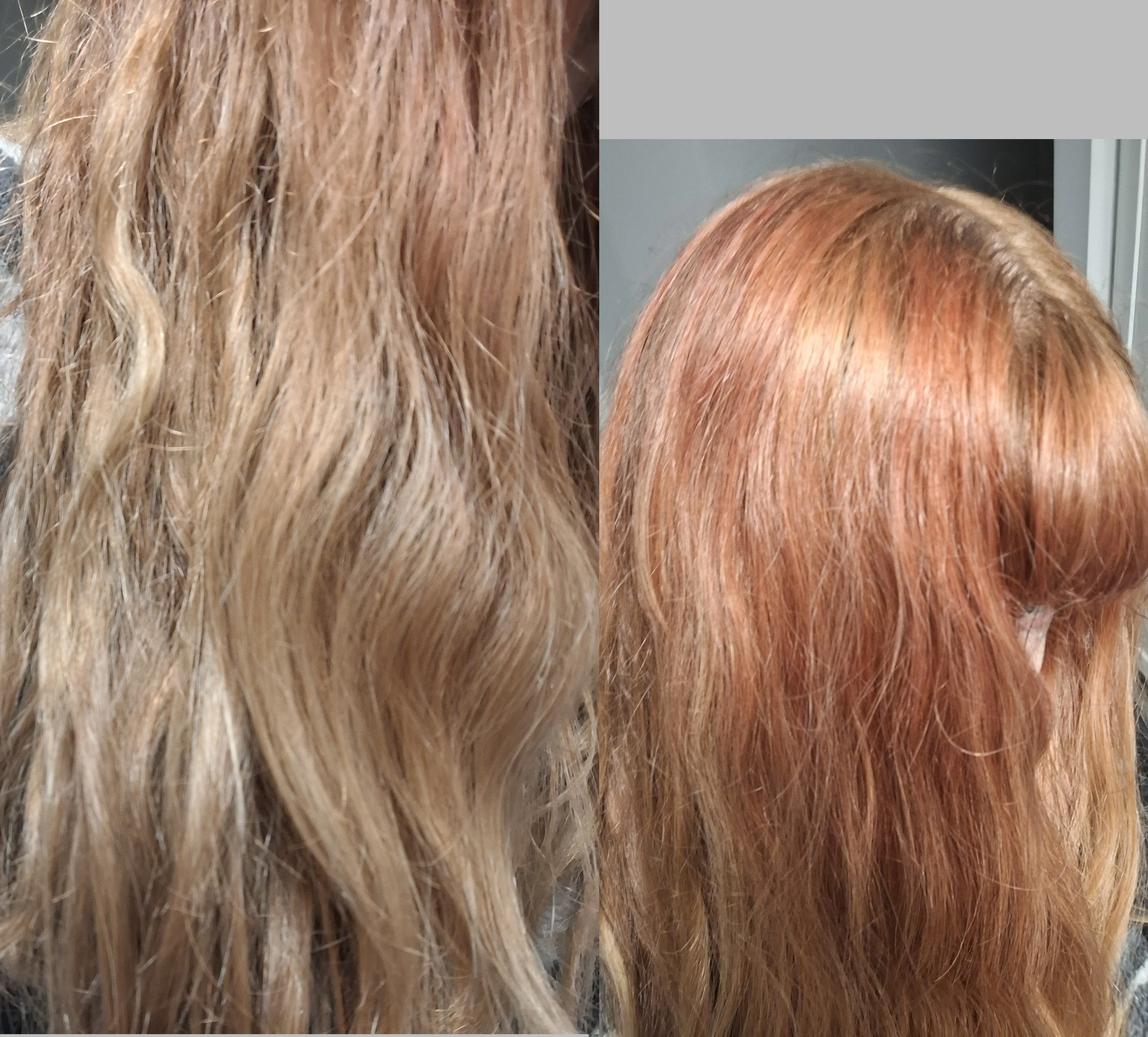
How about here? What do you do with a client whose hair looks something like this?
This is really brassy hair. On the left we are at level 8 and on the right it is more like level 7.
Once again, Brilliant Blondexx will do the job very well, and 20 Vol would be enough once again.
It looks terrible, but you only need to lift by around 4 levels. So, two applications of bleach and 20 Vol would be our recommendations.