If you’ve ever wondered why the same permanent color gives different results on virgin hair versus hair that’s been colored before, you’re not alone.
This is one of the biggest pain points for women coloring at home and for stylists dealing with corrective color in the salon.
In this post, we’ll break down what’s really happening inside the hair, why previously colored hair can be harder to control, and what you can do to get more even, predictable results.
To understand the difference between virgin and previously colored hair, you first need to know what permanent hair color actually does on the hair.
The Structure of the Hair & How Permanent Hair Color Works
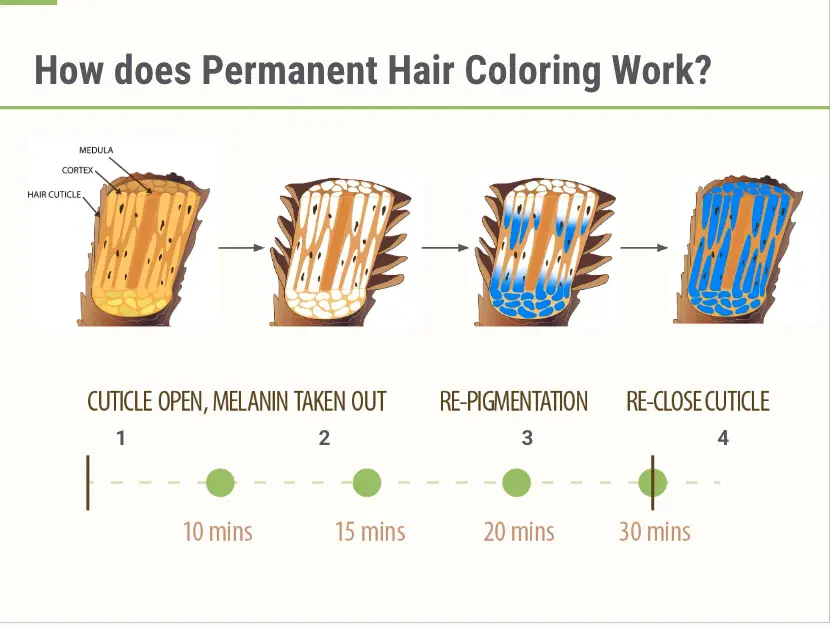
Every strand of hair has three main parts: cuticle (outer layer), cortex (where natural pigment lives), and medulla (often absent and not relevant for color).
Permanent color uses ammonia or an alkalizing agent plus developer (hydrogen peroxide) to open the cuticle and penetrate into the cortex.
Inside the cortex, the developer lightens natural pigment while the artificial dye molecules form and lock in, creating a new, permanent color result.
Virgin Hair versus Previously Colored Hair
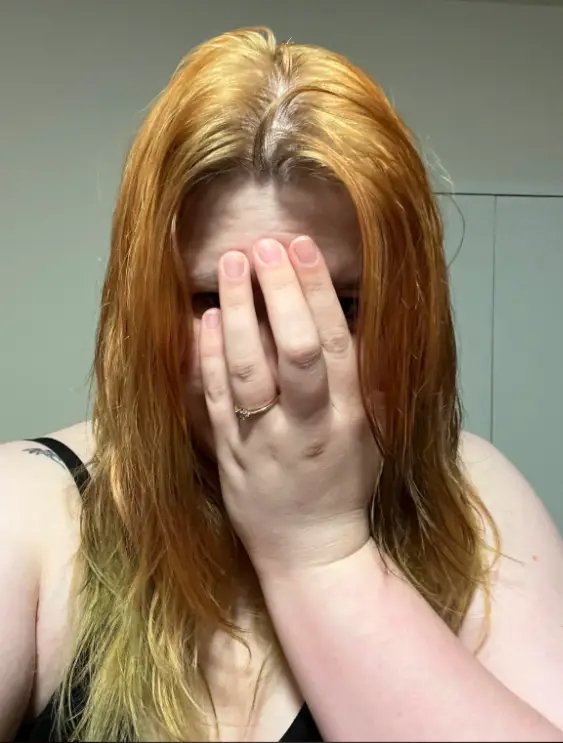
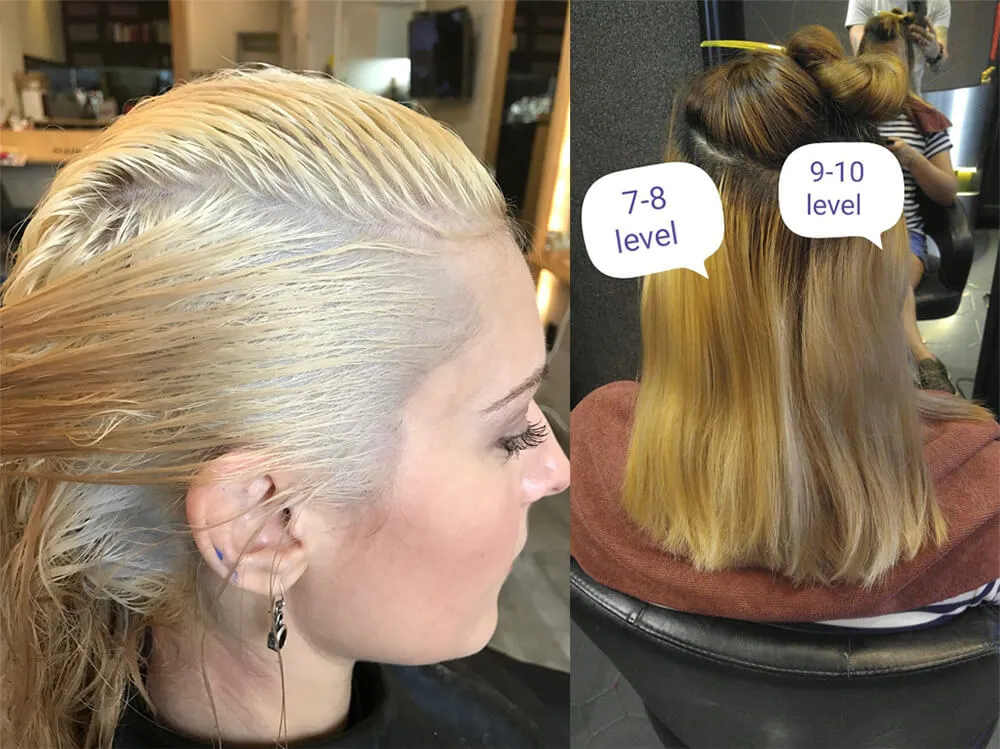
Previously colored hair. Note the brassy orange color and the yellow ends.
On virgin hair, this process is happening on a “clean slate.” On previously colored hair, the cortex already contains artificial dye molecules, plus potential damage and porosity from past services.
What Makes Virgin Hair Different?
Virgin hair is hair that has never been colored or chemically treated. It tends to behave in a much more predictable way with permanent color.
Typical characteristics of virgin hair include more even porosity from roots to ends, only natural pigment present in the cortex, and a strong, intact cuticle that opens and closes more consistently.
What this means in practice is that the developer can lift the natural pigment in a more uniform way.
The target shade usually matches the swatch charts, assuming correct level and developer choice.
You can often achieve both lift and deposit in one step. Going lighter is typically quite easy if you use good quality products.
This is especially so if the virgin hair is at the root area, because the hair gets heat from the scalp and this helps lift the hair more easily.
Results on virgin hair often look glossy, even, and true to tone when the right formula and timing are used.
Roots as well as mid lengths as well as ends.
Why Previously Colored Hair Is More Unpredictable
Previously colored hair is rarely uniform from roots to ends, even if it looks like one solid color at first glance. There is a history inside the hair that the formula has to work through.
Common issues with previously colored hair include artificial pigment buildup from multiple applications of permanent color, uneven porosity (older hair tends to be more porous than fresh root growth), residual warm or dark bands from overlapping applications or previous corrections, and limited lift, because permanent color cannot reliably lift through dark artificial pigment.
Because of this, the same formula you used successfully on virgin hair may look too dark, too flat, or too warm when applied to hair that has been colored several times.
Typical Problems You See on Previously Colored Hair
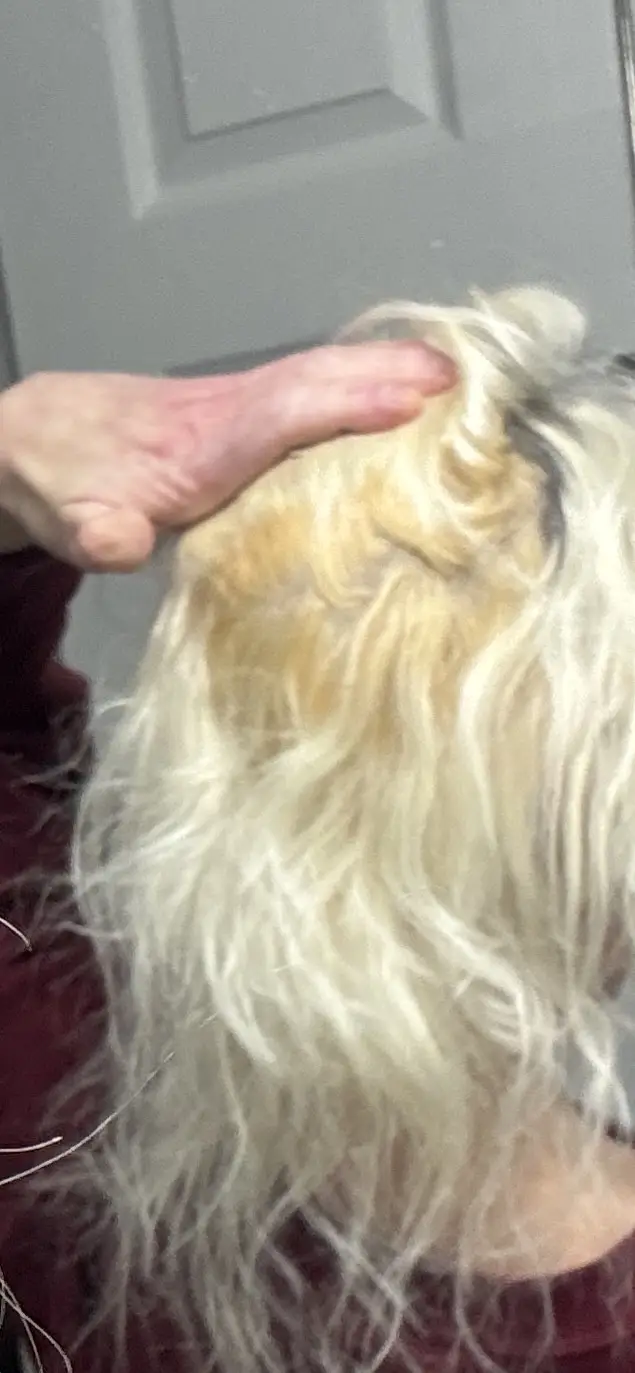
Here are the most common complaints from clients and home colorers when they apply permanent color over old dye:
Dark, muddy mid-lengths and ends, especially with repeated use of darker shades.
“Hot roots” that are lighter and warmer than the rest of the hair.
Banding, where some sections grab darker or different tones.
Lack of vibrancy or shine because of heavy pigment buildup.
Little to no visible lightening when trying to go significantly lighter.
Understanding why these problems happen makes it easier to choose the right strategy.
Why You Need to Vary the Processing Time for Different Areas
One of the biggest mistakes with previously colored hair is applying the same permanent shade from roots to ends at the same time and expecting an even result.
Roots (virgin regrowth) are usually stronger, less porous, and only contain natural pigment.
Permanent color can lift and deposit here as advertised.
Mid-lengths and ends (previously colored) are often brassier. They may also be more difficult to ligten and color.
Because of this, color formulas and timing often need to be different for roots versus lengths.
You might use a slightly different level or tone on the mid-lengths and ends.
You may apply to the mid-lengths and ends later, with a shorter processing time.
In corrective situations, you might need a prep step such as a bleach application before applying the target shade.
Going Lighter on Previously Colored Hair: Use Brilliant Blondexx
Going lighter on previously colored hair will either require bleach or a high lift toner.
If the hair has been colored darker than the desired result, a lightening process (bleach) is usually needed first to pull out some of the built-up artificial color.
Only after you’ve lifted out the old pigment do you go in with a toner or color to refine the level and tone.
So when bleaching, always use a very good quality bleach.
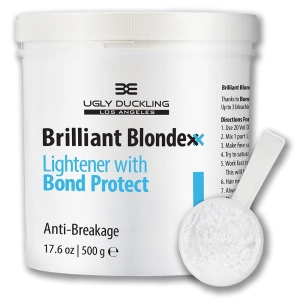
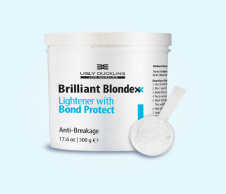
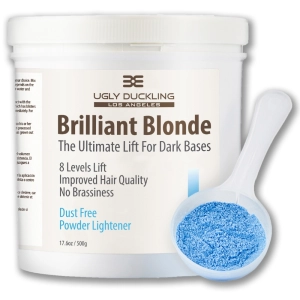
We recommend Brilliant Blondexx Bleach. It contains Bond Protect and will respect hair integrity and even help strengthen it while you lighten.
Brilliant Blondexx also have excellent lifting power. Which is what you need when you are working on previously colored hair quickly and efficiently.
How to “Fix It”: Practical Strategies: Roots, Mid-Lengths & Ends
Whether you’re a stylist or coloring your own hair at home, here are some practical steps to get better results on previously colored hair.
First, start with a realistic consultation. Identify existing level and tone from roots to ends. Think in sections.
You may need to have one strategy for the roots, which will be virgin hair.
Another for the previously colored mid-lengths which are brassy.
And yet another for the ends which may be pale yellow or white from color and bleach applications in the past.
Let's say that you have dark roots. Brassy mid-lengths. And white ends.
What do you do?
Dark hair at the roots means that you need bleach. 20 or 30 Vol with Brilliant Blondexx would make sense there.
So apply to that part and wait at least 20 minutes until the hair has reached yellow.
While you are waiting in those 20 minutes, figure out how much processing you will require for your brassy mid-lengths.
If it is going to need around 10 minutes, go in after 10 minutes and apply fresh Brilliant Blondexx mix and 20 Vol to that part.
After a further 10 minutes, you will have the roots which will have processed for 20 minutes and the mid-lengths which will have processed for 10 minutes.
Do not touch the ends if the ends don't require lightening. You can even wrap that part in foil to keep it away from product mix.
At this stage these the roots and the mid-lengths should be approaching each other in level.
It won't be perfect but at least it will be much better.
Rinse the entire head now.
Tone the Hair
Now your hair, as we said, will be getting to where it needs to be but will still not be perfect.
It may be that the roots are pale yellow, and the mid-lengths are bright yellow. And the ends are white.
Or it could be the other way around. Roots still bright yellow, but mid-lengths pale yellow. And the ends white.
Depending on overall how much lifting is still required, you need to decide how much lift you still need when you tone.
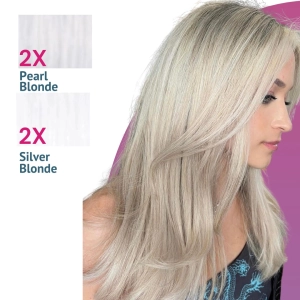
Very good toner to use at this stage are Ugly Ducking's Intense Pearl Blonde or Intense Silver Blonde toners.
The advantage of these toners is that they contain significant lift. Around 2-3 levels of lift when used with 20 Vol developer.
So apply this mix to the part which is the most yellow. Apply to the more pale yellow parts later.
In other words, use different processing times to give different areas different amounts of tone and lift.
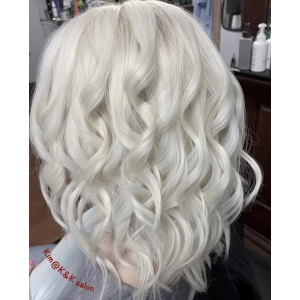
Do that and you should be able to get the entire head to one consistent blonde level.
Last Stage: Tone with Purple Shampoo and Mask
There may still be some differences between different parts of the hair.
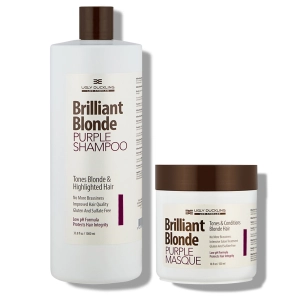
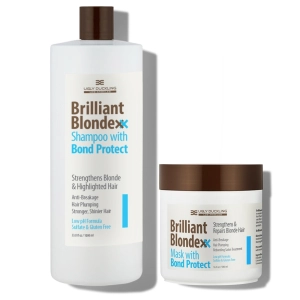
At this stage, you should use Purple Shampoo and Mask.
Once again, Ugly Duckling has the perfect product: Brilliant Blonde.
The purple pigments in Brilliant Blonde will do a great job of doing one more neutralization of yellow hair.
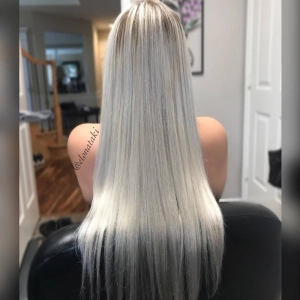
And take the hair one more step closer to the target pale blonde.
Toning Down Previously Colored Hair: Use Color Gel
Toning down previously colored hair is easier than lifting.
When going slightly darker on previously colored hair, we recommend using a formula and developer that focus on deposit rather than lift for the previously colored sections.
In other words, use a demi-permanent.
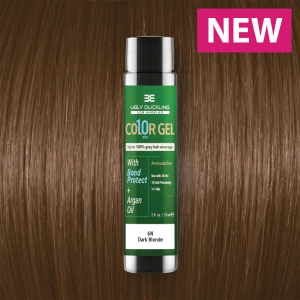
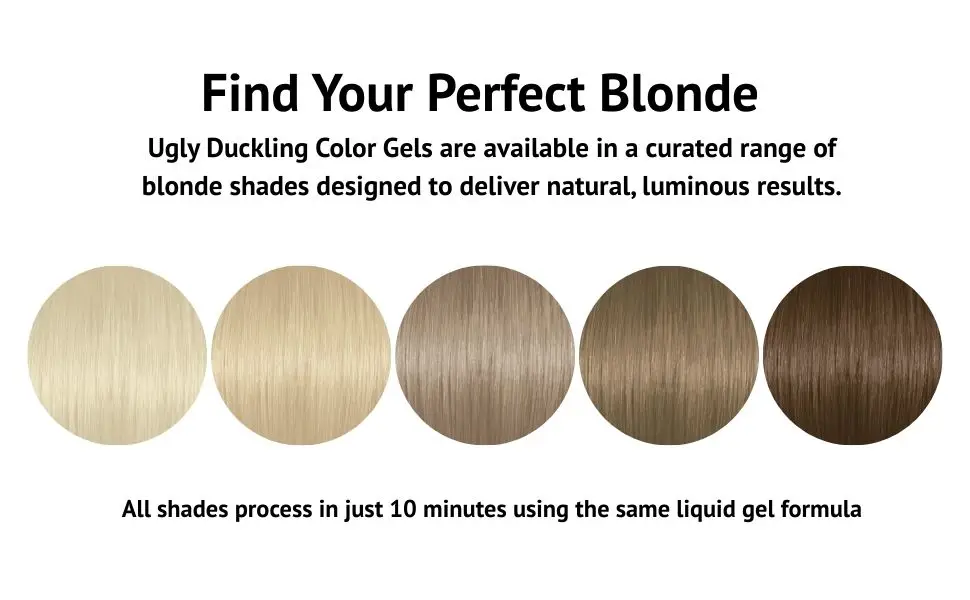
We recommend that you Color Gel when you have tone-down applications on previously colored hair.
Color Gel is a demi-permanent (no ammonia) will not try and open the cuticle too much, but will instead deposit color gently, taking it darker with a more natural appearance.
You will get better shine and tone in doing so.
Final Thoughts for The Stylist
Permanent hair color is not one-size-fits-all, especially once the hair has a color history.
Virgin hair and previously colored hair react differently because their internal structure and pigment load are different.
When you understand what’s happening inside the hair shaft, you can choose smarter formulas and application methods, reduce surprises, and get closer to those even, shiny results.
And this will get you as a stylist closer to the nirvana of one very beautiful result,
And one happy customer!